17 September 2019
- Southern Giraffe (Angolan) Giraffa giraffa angolensis appear to be spreading their range southward in Namibia. We recorded them at 2 localities within the Namib-Naukluft Park.
- Savanna Hare Lepus microtis recorded by us in the Erongo Mountains.
- Lion Panthera leo also appear to be expanding slightly southwards in western Namibia. With re-introduction and natural expansion in the Erongo Mountains and surrounding areas. Lion also make incursions from the east into the Karstveld of north-eastern Namibia and Mangetti National Park. It is believed these lions probably originate in the Khaudom-Botswana border region.
- Cheetah Acionyx jubatus: recent records indicate that Cheetah are reoccupying parts of the historical range in the pro-Namib, for example NamibRand NR and records as far south as the Aus-Lüderitz road.
- Elephant Loxodonta africana on occasion move through areas of their historical range in Namibia, for example the Erongo Mountains and the Karstveld near Otavi and Grootfontein. These movements appear to be associated with seasonally abundant food.
- Hook-lipped Rhino Diceros bicornis have been re-introduced into several areas of Namibia including the Erongo Mountains.
- The Black Mongoose Herpestes nigrata appears to be more widespread than was originally thought, new records include the Karstveld in the northeast and along the south bank of the Kunene River.
- New records show that a Red Rock Rabbit Pronolagus sp. is present in the Karstveld of northeastern Namibia. How widespread this is in the system remains to be established. This appears to be a completeley isolated population, as is the population occupying the inselbergs of the pro-Namib in the west.
03 August 2019 - New description of Dryas Monkey - Cercopithecus dryas:
A relatively small monkey with grizzled brown-grey on back, white underparts, inner thighs and much of tail, which is black above and on bushy tip. Much of outer legs and upper surface of hands and feet black. Black face contrasts with band of white to orange-white hair, widest on brow, that encircles it. Neck and upper chest normally yellow and rump brilliant blue, especially prominent in male. It is now known that the Salonga Guenon (Cercopithecus salonga) was described on the basis of a juvenile Dryas Monkey and has been removed from the faunal list.
01. July 2019:
Sand Cat - Felis margarita:
Was recorded resting up during the day in brown-necked raven nests in low trees in the Moroccan Sahara.
Riverine Rabbit - Bunolagus monticularis:
Was photographed recently with a camera trap in the western section of the Baviaan's Kloof, Eastern Cape.
Galagoides nyase
occurs in southern Malawi and adjacent area of Mozambique, call is distinct. It was previously placed with G. moholi.
Felis silvestris libyca has again been classified back to Felis libyca.
Acomys muzei
has been split away from Acomys spinosissimus and it occurs in north-east Zambia.
09. June 2019 - Golden Cat - Caracal aurata:
First proven record for Tanzania of this felid in the Minziro Forest, northwest Tanzania near Uganda border.
African Brush-tailed Porcupine - Atherurus africanus:
New record for Zambia in North-west of the country in the Mwinilunga district.
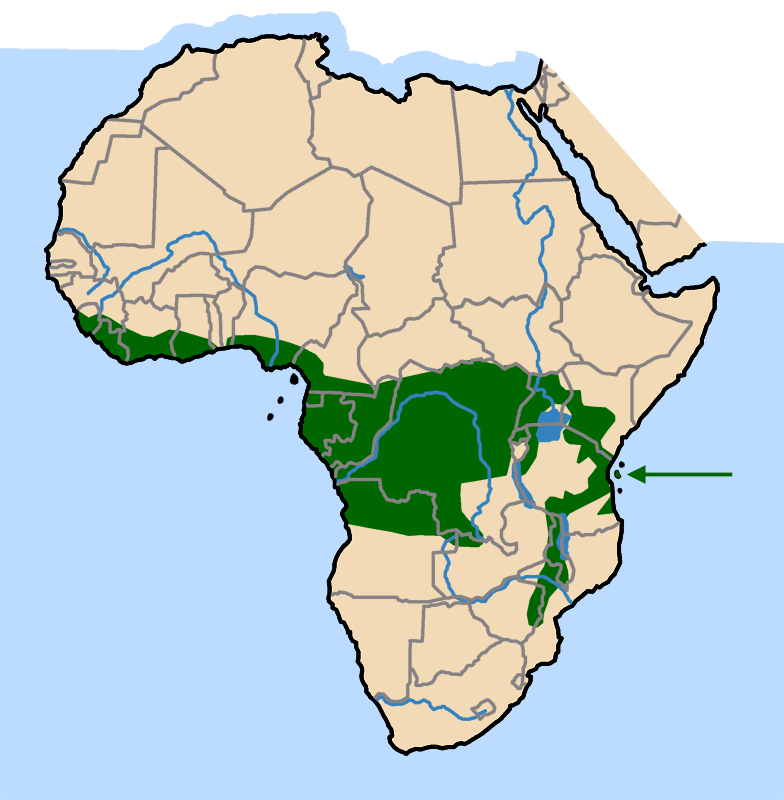
17. December 2018 - Nandinia binotata - African Palm Civet:
The distribution map in the Field Guide Fourth Edition 2017 unfortunately does not show the West African range of this species. On the map below the correct distribution is shown.
7. November 2018:
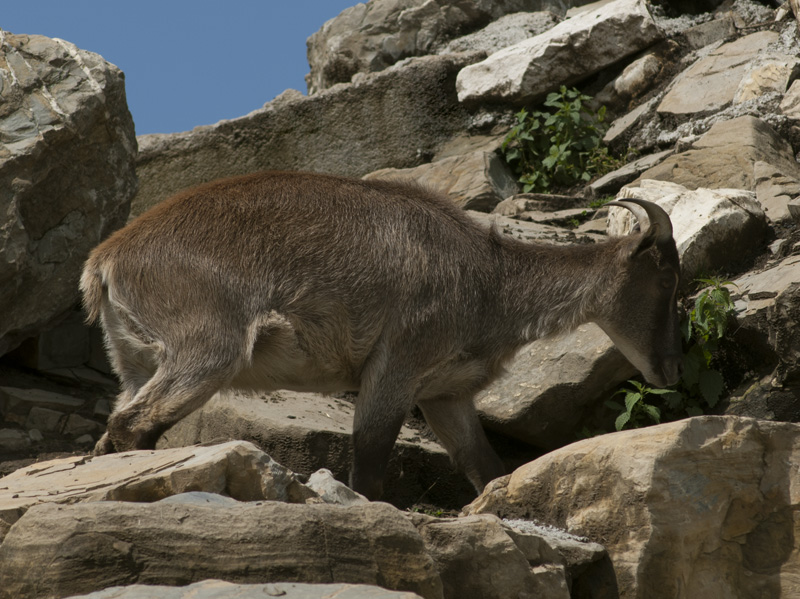
Himalayan Tahr: There are still sightings reported in Table Mountain National Park despite past culling efforts.
29. September 2018:
- Hook-lipped Rhinoceros Diceros bicornis: Six individuals were recently re-introduced to Zokouma National Park, Chad, from South Africa.
- Bongo Tragelaphus (Boocercus) eurycerus: Thought to be long extinct in western Uganda but recent records indicate that it still occurs in Semuliki National Park.
21. July 2018:
- Red Colobus group: previously placed in genus Procolobus are now reclassified as genus Piliocolobus.
- Zanzibar Red Colobus - Piliocolobus kirkii: Although considered to be Endangered recent counts indicate that there are almost 5,000 Colobus in 342 groups and they occupy 376 square kilometres.
- Beaked Whales - Recent evidence indicates that the newly described Deraniyagala's Beaked Whale (Mesoplodon hotaula) occurs around western Indian ocean islands (Seychelles, Mauritius) and may in time be found off the eastern African coastline. Previously placed with the Ginko-toothed Beaked Whale but separated on genetic grounds. it is known from 7 speciems and several sightings off the Maldives.
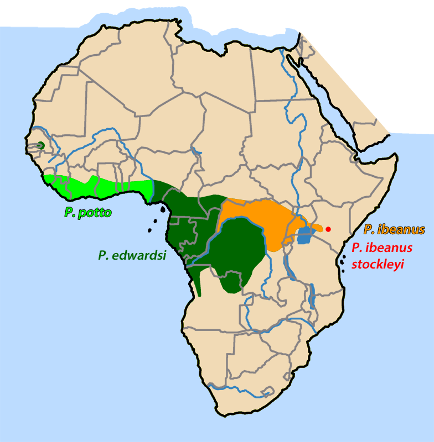
17. April 2018: Potto subspecies have now been raised to full species level. The approximate ranges are given on the map here.
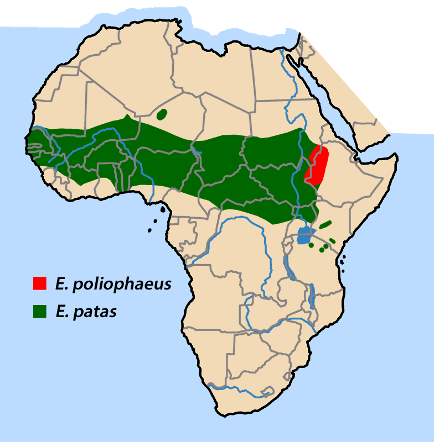
17. April 2017: A new species of Patas Monkey (Erythrocebus poliophaeus) has been described recently. We have adapted the map accordingly.
The revision of the Larger Mammals is now available (July 2017). The list of those species that are covered can be found in this table, including scientific, English, French and German common names:

|
Sc E G F names Larger Mammals for website.xlsx Size : 40.092 Kb Type : xlsx |
20. July 2017: Unfortunately an error occurred in one of the distribution maps - the Sanje Mangabey on page 47, the correct map is here:
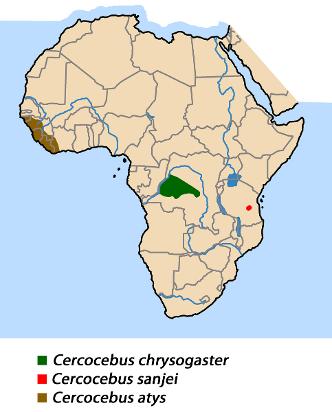
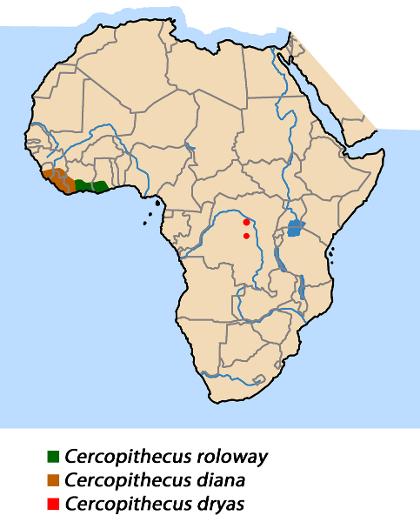
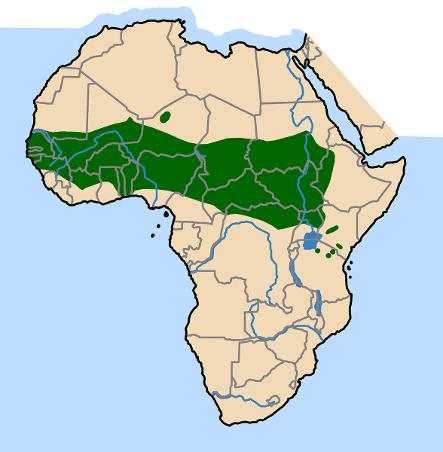
20. July 2017: Since compiling the book, already new distribution data has become available for some species. Here are 2 new distribution maps: Cercopithecus dryas left and Erythrocebus patas right.
20.07.2017: A few taxonomic changes have also been made !
- The African Wolf is now Canis lupaster (not C. anthus) but this is still under discussion.
- Black-backed Jackal is now Lupulella (Canis) mesomelas.
- Side-striped Jackal is now Lupulella (Canis) adusta.
- Kinda Yellow Baboon is now a full species in its own right, Papio kindae.
- Common or Robust Chimpanzee - some believe it should be P. t. marungensis in East Africa.
And finally a note on the Okapi: latest estimates of animal numbers are 10,000-15,000.